Rounding your back is the only way to save it
TL;DR: The 30-Second Jefferson Curl Guide
If you’ve been told that bending your spine is a sin, here’s the quick truth:
- Rigidity breeds weakness. Locking your lower back in a neutral cage leaves your stabilizer muscles asleep and your joints brittle.
- Articulate, don’t shear. The Jefferson Curl uses a very light weight to strengthen your spine vertebra by vertebra.
- The Golden Rule: Start with bodyweight or a tiny dumbbell. Fold slowly like a zipper. Never rush, and stop immediately at any sharp pain.
- The Rebuilding Plan: Read the complete science of active recovery in my cornerstone guide explaining why your physical therapist is keeping you weak.
Rounding Your Back is the Only Way to Save It
I know they told you to keep your spine flat at all costs, but rounding your back is the only way to save it.
If that statement makes you nervous, you’ve been thoroughly trained by a safety-first clinical industry that’s left you stiff, weak, and vulnerable.
You’ve been told by physical therapists, trainers, and online fitness gurus that your spine is a fragile stack of plates. They told you that if you round your lower back even a fraction of an inch, your discs’ll fly out like wet soap. They forced you to keep your back perfectly flat at all costs.
So you live in a mental prison. You walk stiffly, you stand up rigidly, and you hold your breath when you bend over to tie your boots.
But here’s the irony. Your back’s still stiff. Your joints still ache. And despite all your caution, your back still locks up in spasm every few months.
You’re living in fear of a basic human movement. And that fear’s exactly what’s keeping you weak.
The Rigid Spine Lie
Standard physical therapy consensus has set you up to fail. They told you that because you herniated a disc, you must avoid spinal flexion forever. They locked you in a neutral cage.
But physics and biology don’t work that way.
Your spine isn’t a steel support beam. It’s an articulating system made of 24 movable bones, designed to bend, twist, and absorb force in every direction. When you avoid bending your back, the deep stabilizing muscles, your multifidus, shut down completely. Your joint capsules dry up.
So when you accidentally round your back in real life (which happens every single day), your spine has zero capacity to handle the load.
The traditional “never bend” advice isn’t protecting you. It’s actively shrinking your stabilizing muscles and keeping you weak. To build a back that can survive real life, you’ve got to teach it to bend under controlled weight.
What’s a Jefferson Curl?
The Jefferson Curl is the antidote to the rigid spine cage.
Unlike a deadlift, where you keep your back flat to absorb heavy weight, the Jefferson Curl is an articulation movement. We use an extremely light weight to actively round and flex the spine vertebra by vertebra, stretching the posterior chain and forcing the deep stabilizing muscles to contract under load.
It turns your weakest link into your strongest armor.
Here’s what happens when you perform it correctly:
- You articulate your spine, releasing compressed joint capsules.
- You pump fresh, nutrient-rich blood directly to your spinal discs.
- You strengthen the deep erectors at their longest and weakest range of motion.
- You eliminate the fear of bending over.
The Step-by-Step Protocol
This isn’t an ego lift. If you try to lift heavy or rush this movement, you’ll get hurt. Approach it with respect, focus, and perfect control.
- Stand tall on a stable box or flat bench.
- Hold a very light weight (a 10-pound dumbbell to start) in both hands.
- Tuck your chin directly to your chest.
- Slowly round forward, starting at your neck, then your upper back.
- Articulate downward vertebra by vertebra, like a zipper.
- Let the weight pull you down past your toes. Keep your legs straight.
- Pause at the bottom for a deep stretch in your hamstrings and back.
- Reverse the movement, unzipping your spine from bottom to top.
- Stand completely tall and repeat.
The Progression Scale
| Phase | Loading | Target Sets & Reps | Tempo |
|---|---|---|---|
| Phase 1: Bodyweight | Zero weight | 3 sets of 10 slow reps | 5 seconds down, 5 seconds up |
| Phase 2: Light Iron | 10 to 15 lbs | 3 sets of 10 slow reps | 4 seconds down, 4 seconds up |
| Phase 3: Progressive | 20 to 30 lbs | 3 sets of 8 slow reps | 4 seconds down, 4 seconds up |
Hauling Oak and Wrangling Boats
This is about real-world resilience in Southeast Missouri.
You need to bend over to lift a heavy cast-iron skillet off the campfire. You need to hunch down to reach a stubborn bolt on your boat motor. You need to pick up heavy oak firewood off the ground in winter.
If your spine’s locked in a rigid cage, those movements are dangerous. If you’ve trained your spine to articulate under light weight, those movements are effortless.
We don’t train to look pretty on a screen. We train to be capable, functional providers who can handle the physical workload of living in the Ozarks without fear of getting sidelined.
Reclaim Your Spine
Stop living in a prison of fear. Stop letting outdated advice keep you weak, stiff, and vulnerable.
If you’re ready to stop guessing and want a joint-safe, mathematically sound plan built for big guys who want their physical edge back, let’s get to work.
Apply for my premium 90-Day Fitness Coaching Program. We’ll fix your safe exercise swaps, map out your spinal progression, and build a body that actually works.
Written by John Morris
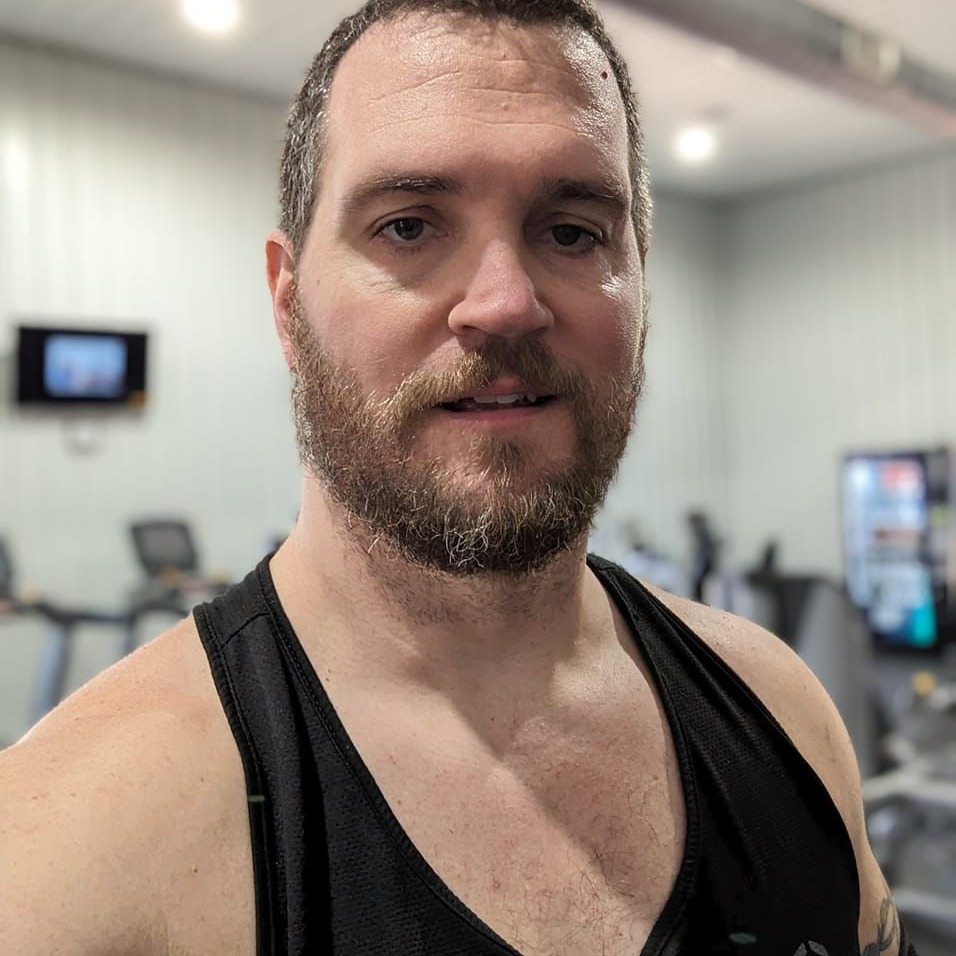
John Morris is the founder of vanburenstrength.com based in Van Buren, Missouri. He is an 11-year Army veteran, a 260-pound strength coach who rebuilt his own frame after three herniated discs. He has zero tolerance for fitness fluff, generic routines, or empty promises.
Apply for 1-on-1 Coaching