The No BS Guide to Strength After 40: Stupid TikTok Trends and Why Your Results Suck
How’s that lifting progress going?
Have you been hitting the gym for two years with very little to show for it? Did you try the “optimal” cable angles? Did you run the highly optimized, “science-based” routine some 22-year-old influencer swore by?
And after all that, are you still struggling to put up decent weight? Do you still have that same stubborn gut? Has your bench press barely budged?
Your results suck because you’re distracted by shiny objects.
When you look in the mirror, you probably want to blame your age. You want to blame a slowing metabolism, a demanding career, or the kids. That’s a comforting lie. You’re too busy swiping through your feed looking for a magic bullet. You’ll spend three hours researching the perfect biomechanical bicep curl, but you refuse to spend three minutes tracking what you actually put in your mouth. You’re stepping over dollars to pick up pennies.
It’s not all your fault. The fitness industry is designed to keep you confused so you keep buying things. The truth is much colder and much simpler. Your body adapts based entirely on inputs and outputs. It’s a strict equation. If you ignore the baseline math of caloric control and heavy iron, no amount of trendy training will save you.
You’re failing because you refuse to run the numbers.
TL;DR: The 40+ Recovery and Muscle Math
If you’re too busy for the deep dive, here is the math you need to execute today:
- The Calorie Ceiling: Calculate your TDEE and eat 10% less to lose fat.
- The Protein Floor: Eat 1 gram of protein per pound of desired body weight.
- The Iron Rule: Add weight or reps every single week. No exceptions.
- The Recovery Requirement: Get 7 to 9 hours of sleep or your testosterone will crater.
Why Bio-Hacking is a Waste of Money After 40
You see them every day at the gym. They’re the guys wearing $150 compression tech, sipping neon-colored “intra-workout” formulas, and checking their wearable rings every five minutes to see if their “readiness score” is high enough to pick up a dumbbell. These are the same guys who have looked exactly the same for three years. They’re obsessed with the “1%” (the marginal gains, the supplements, the cold plunges, and the “bio-hacks”) while their 99% foundation is a total disaster.
It’s stupid. There’s no other word for it.
You’re failing because you’re treating your body like a laboratory before you’ve treated it like a savings account. Fitness, especially after 40, is a simple equation of inputs and outputs. If you aren’t tracking the big numbers, the small numbers don’t matter. You’re trying to use a $60 bottle of “test-boosting” garbage to fix a lifestyle that is completely broken.
The Best Muscle Building Diet: Why Supplements Fail
Let’s look at the “supplement stack.” The industry loves a guy in his 40s because he has disposable income and a fading sense of his own invincibility. They sell you on the idea that your “hormonal optimization” is just one proprietary blend away.
Run the numbers. If a supplement claims to increase your recovery speed by 5%, but you’re only sleeping five hours a night, you’re still operating at a massive deficit. You can’t supplement your way out of a $3,000-a-month mortgage if you only earn $2,000. It doesn’t work in business, and it doesn’t work in your physiology.
Stop buying the lies sold by influencers who are on $500 worth of “pharmaceutical assistance” while they tell you their “super-greens” powder is the secret. It’s a scam. Most of these supplements end up as expensive urine. If you’re shopping at the local grocery store, buy some steak and eggs. That’s your supplement. Everything else is just a distraction from the fact that you aren’t doing the hard work of tracking your actual food intake.
How Sleep Impacts Testosterone and Recovery
Take sleep, for example. It’s not a luxury. It’s the primary variable in the recovery equation. You can run the most “science-based” routine in the world, but if your body doesn’t have the downtime to repair the tissue you tore down, you aren’t building muscle. You’re just digging a hole.
If you’re staying up late finishing work reports or scrolling through TikTok looking for a “new” way to hit your side delts, you’re actively sabotaging your gains. Your body does its best work when you’re unconscious. If you aren’t getting seven to eight hours of shut-eye, your testosterone levels drop, your cortisol spikes, and your body clings to fat like it’s a precious resource.
You don’t need a $2,000 “smart mattress” or a red-light therapy panel. You need to put the phone in the other room, turn the AC down, and go to bed. It’s free. It’s effective. But it’s not “flashy,” so nobody wants to talk about it.
Tracking Calories vs. “Eating Clean”: The Real Math
Why do guys focus on the latest greatest supplement instead of their caloric intake? Because tracking is boring. It’s a job. It requires you to be honest with yourself about that extra serving of chips or those three beers on a Tuesday night.
I’m not just calling you out for the sake of it. I’m calling you out because I spent years being that guy. I spent years refusing to track my calories, following every fad diet that promised a shortcut, and honestly believing I could “clean eat” my way to weight loss without ever looking at the numbers. I convinced myself that as long as the food was “healthy,” the quantity didn’t matter. When I finally hit 300 pounds, it was time for a brutal reality check.
It is much easier to swallow a pill than it is to weigh your food. But the math doesn’t care about your convenience. If you are eating 3,000 calories and burning 2,500, no “fat-burning” supplement in the world is going to change the fact that you’re getting softer.
I achieved the best physique of my life at 45 by doing less variety and more of the boring, consistent work that actually moves the needle.
How to Use Progressive Overload to Build Muscle
If you aren’t adding weight to the bar, adding reps to the set, or improving your form, you aren’t training. You’re just exercising. Most men at the gym are doing the same 225-pound bench press for the same 10 reps they did in 2022. That is a mathematical stalemate. Your body is an adaptation machine, but it is also efficient; it will not waste energy building expensive muscle tissue unless it is absolutely forced to do so by increasing demands.
It’s the law of Progressive Overload. It is the gradual increase of stress placed upon the body during exercise. You don’t need a “new” routine every three weeks to “shock” the muscle. You need to do the same fundamental movements and systematically update the equation. In The Systems Manifesto, I show you a strategy called Adaptive Progressive Overload to implement this without burning out.
I know what you’re thinking. “My back is a mess.” Trust me, I’ve herniated three discs in four years ego-lifting. I’m not telling you to be reckless; I’m telling you that even with a history of injury, if the numbers don’t move, the body won’t either. You just have to move them smarter.
Hypertrophy After 40: The Science of Muscle Growth
| Method | How to Do It | Why it Works for 40+ |
|---|---|---|
| Weight | Add 2.5 to 5 lbs to the bar | Provides a pure strength stimulus to the nervous system. |
| Reps | Increase from 8 to 12 reps | For older people, this is typically the best place to start to avoid injury. |
| Tempo | Use a 3-second descent | Creates maximum tension and hypertrophy with zero ego-lifting momentum. |
Why You Need a Strength Training Logbook
In the gyms around Van Buren and Southeast Missouri, I see guys chasing “the pump” or “the burn.” Those are feelings, not data points. Feelings are liars. I want to see your logbook. Whether you use an app like Hevy or a notebook, you need to track your lifts.
You have everything you need: barbells and dumbbells. You don’t need a $5,000 selectorized machine. You need the discipline to look at what you did last Tuesday and beat it by one rep or five pounds. It is a slow, methodical grind. Aim to progress every 1-2 weeks. You are building a body through consistent, compounding work. It’s not flashy, but it’s the only thing that works.
How to Calculate TDEE and Protein for Fat Loss
You can’t out-train a garbage diet, and you definitely can’t guess your way to a leaner physique. Most men fail because they’re chasing “superfoods” instead of managing their daily energy intake. Your body operates on the strict math of Total Daily Energy Expenditure (TDEE), the total number of calories you burn daily. This includes your Basal Metabolic Rate (BMR), daily movement (NEAT), and even the energy it takes to digest your food (TEF).
If you aren’t running the numbers on your Total Daily Energy Intake (TDEI), you’re just hoping for the best. To lose the gut, you need a caloric deficit. To build the frame, you need a slight surplus.
The Protein Floor
The most important number in your daily routine is your Protein Floor. Aim for 1 gram of protein per pound of desired body weight. While research shows that 0.7g to 1.0g per pound is the optimal range for muscle growth, hitting that 1g mark is a reliable rule of thumb to ensure you never leave gains on the table.
- Thermic Effect: Protein has the highest thermic effect of all macros, meaning your body burns roughly 20-30% of those calories just trying to process the meal.
- Satiety: High protein intake keeps you satisfied, making a caloric deficit sustainable.
- Source and Convenience: Get the bulk of your protein from staples like steak, eggs, and chicken. Protein powder isn’t a “magic bullet,” but it is a tool for convenience. If you’re struggling to hit your target between meetings, a shake is a practical way to ensure you hit your numbers.
Avoiding Overtraining: Maximum Recoverable Volume (MRV)
Training hard is only half of the equation. If you aren’t managing the stress you place on your body, you aren’t building muscle; you’re just digging a hole. Fatigue management is about balancing the stress of your workouts with adequate recovery.
The Maximum Recoverable Volume (MRV)
You have a specific ceiling for how much training you can actually benefit from, known as your Maximum Recoverable Volume (MRV). For most guys chasing an aesthetic look, the optimal range is 10-20 sets per muscle group per week. If your strength is dropping, you have low energy, or you’re persistently sore for more than 72 hours, you’ve likely blown past your MRV and need to scale back.
Deload to Reload
Cumulative fatigue builds up over weeks of pushing progressive overload. To reset your recovery reserves, you must implement a deload week every 4 to 8 weeks. This isn’t a week off; it’s a planned reduction where you cut your sets by roughly 40 to 50 percent and lower the intensity.
Sleep: The Missing Link
Sleep is the foundation of your entire fitness journey. Despite this, a lot of men completely ignore it. Busy men with demanding jobs, businesses to run, and families to support often treat sleep as a luxury they can cut to get more done. This is a mistake. Sleep is the glue that holds your fitness plan together.
- The Target: Aim for 7 to 9 hours of quality sleep nightly.
- Stress Management: Sufficient sleep lowers cortisol, a stress hormone that can break down muscle tissue and promote fat storage.
- Optimization: Keep your room cool, ideally 60 to 67 degrees, and dark.
Your 24-Hour Action Plan
- Calculate Your BMR: Determine your baseline burn using the Mifflin-St Jeor Equation.
- Set Your TDEI: Adjust your TDEE by 10-15% to move the needle on body fat.
- Hit Your Protein Floor: Target 1g per pound of your desired body weight.
- Log Your Iron: Download Hevy and track your weight and reps for every set.
- Go to Bed: Set a hard “screens off” time 60 minutes before you sleep.
If you’re ready to stop guessing and start running a predictable system, read the written Systems Manifesto here.
If you’re in Van Buren and want to run these numbers in person instead of on a screen, come see me. Let’s get your body working.
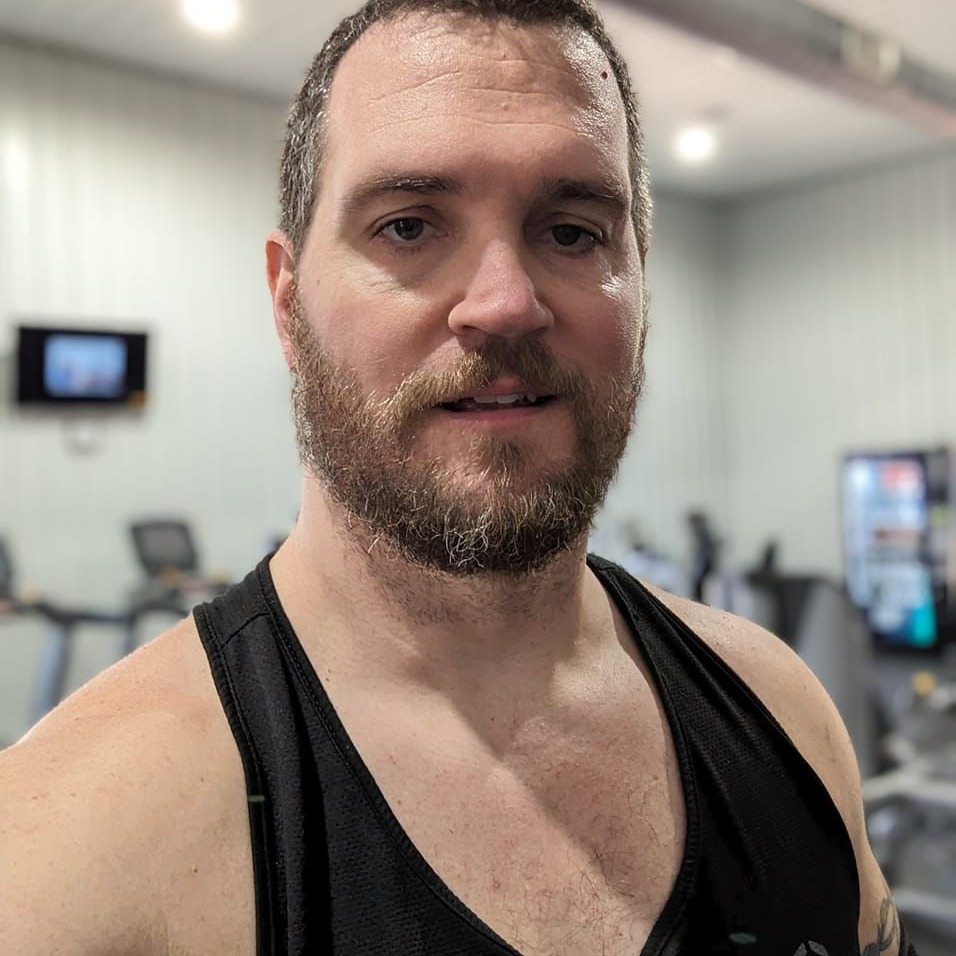
Written by John Morris
John Morris is the founder of vanburenstrength.com based in Van Buren, Missouri. He is an 11-year Army veteran, a 260-pound strength coach who rebuilt his own frame after three herniated discs. He has zero tolerance for fitness fluff, generic routines, or empty promises.
Apply for 1-on-1 Coaching